
A streetwear label I built end to end — the wordmark, the prints, the garment spec, a factory-ready techpack, and the marketing that finally decided it.
I closed it. Print on demand never gave me the garment I had imagined, and the marketing ate the hours the design deserved. What the year left me is the part I actually wanted: knowing how a graphic becomes a product, and what it costs when the specification is vague. That is the work I do for other people now.
Drew the brand
A wordmark, a monogram and a set of prints. Before anything could be made, the label needed a look that held together.
Put it out
Hoodies, tees, bags and caps through print on demand, sold thorugh a storefront I built and ran myself — plus one cut-and-sew hoodie exactly as intended: 450 gsm brushed french terry, specified seam by seam for production.
Stopped
Running a label isn't just designing. It is a 50 hour job on top of my dual study program. In the end, family, friends and my faith mattered more.
The best one
Front print · screenprint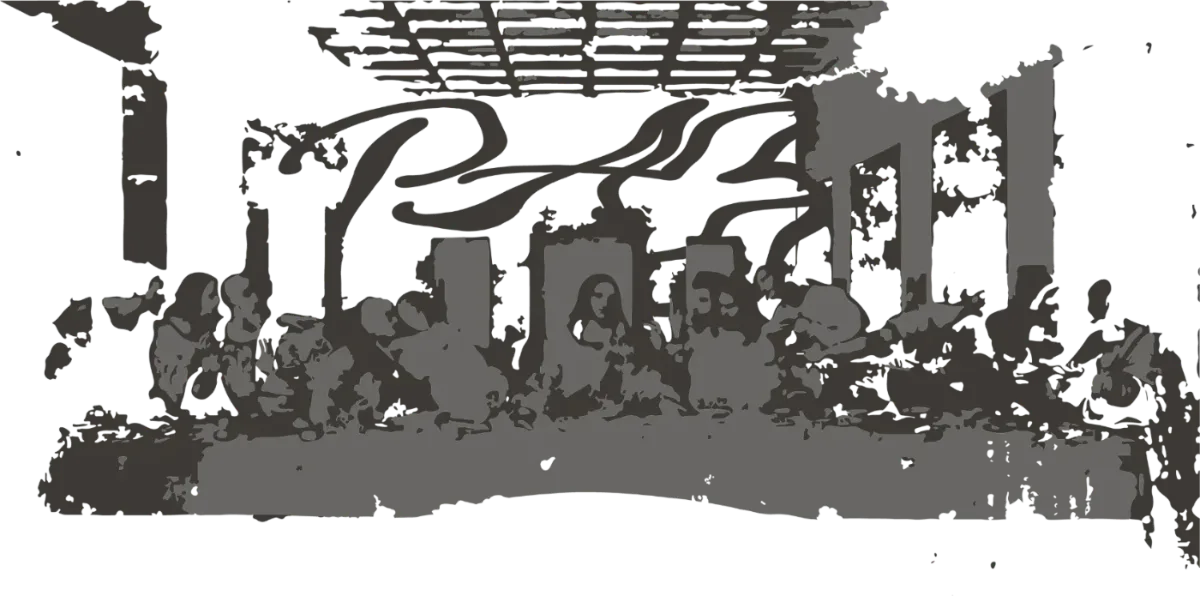
The Last Supper, posterized down to two tones so it translates cleanly in print. The wordmark is build directly into the ceiling rafters rather than slapped on top — subtle enough that you only catch it on a second or third look.
The mark
Monogram
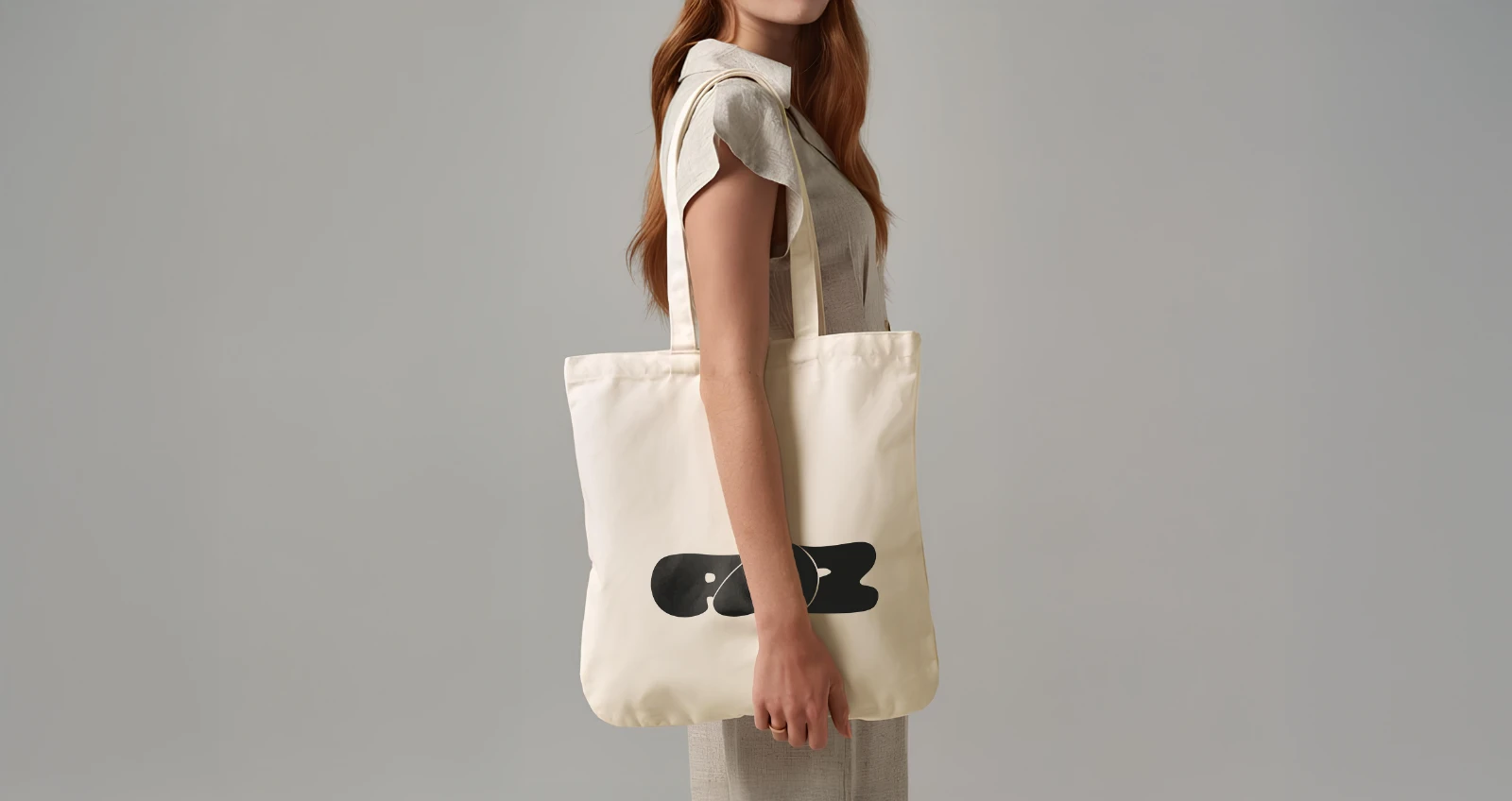
The lettermark: a "P" coming from the typographic mark "PAZ" but isolated and shaped as a paitners's palette. One letter carrying the brand's entire premise: making things rather than just selling them. built to hold its weight wether it's a 1 cm woven neck label or a 38 cm print across the chest.
What shipped
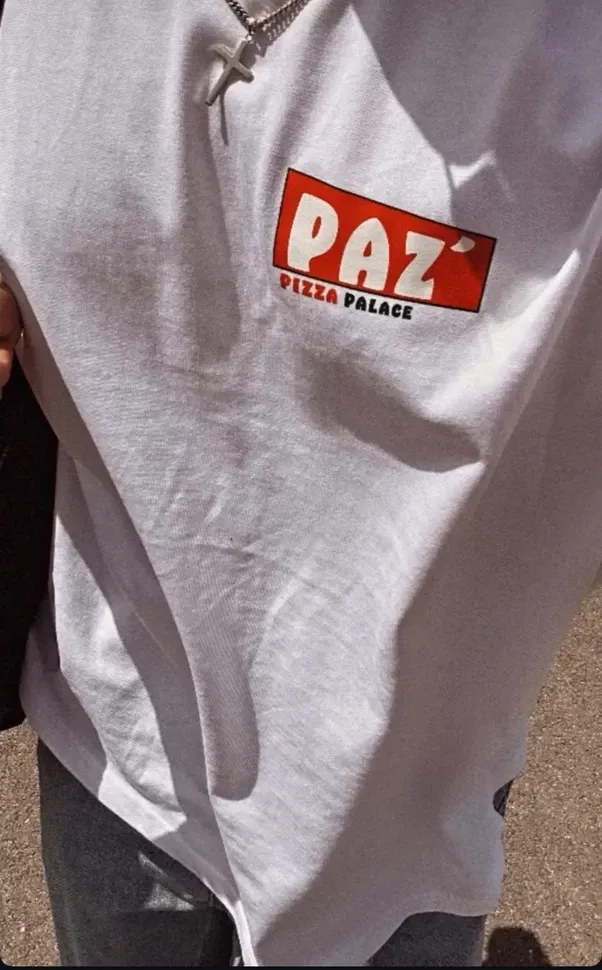
Print on demand · own shopFour product types went live — hoodies, tees, bags, caps — produced via one of the highest-end print-on-demand setup in Germany with a Quality worth double or triple the price. The shop: storefront, product pages, checkout, shipping rules, all of it built and run by me. No time for proper marketing meant almost none of it sold: a few tees went to a friend, and that was the whole story.

The specification
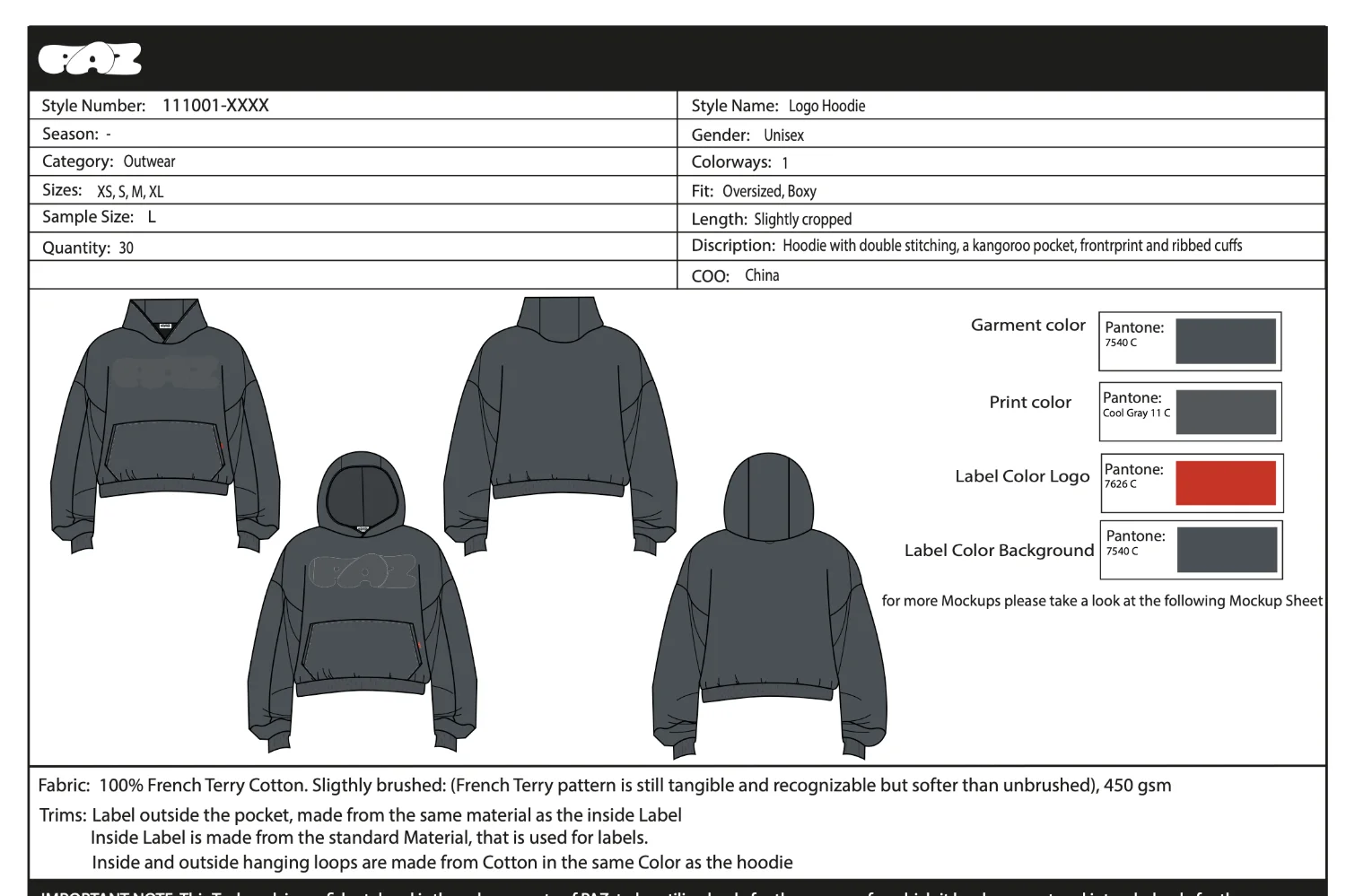
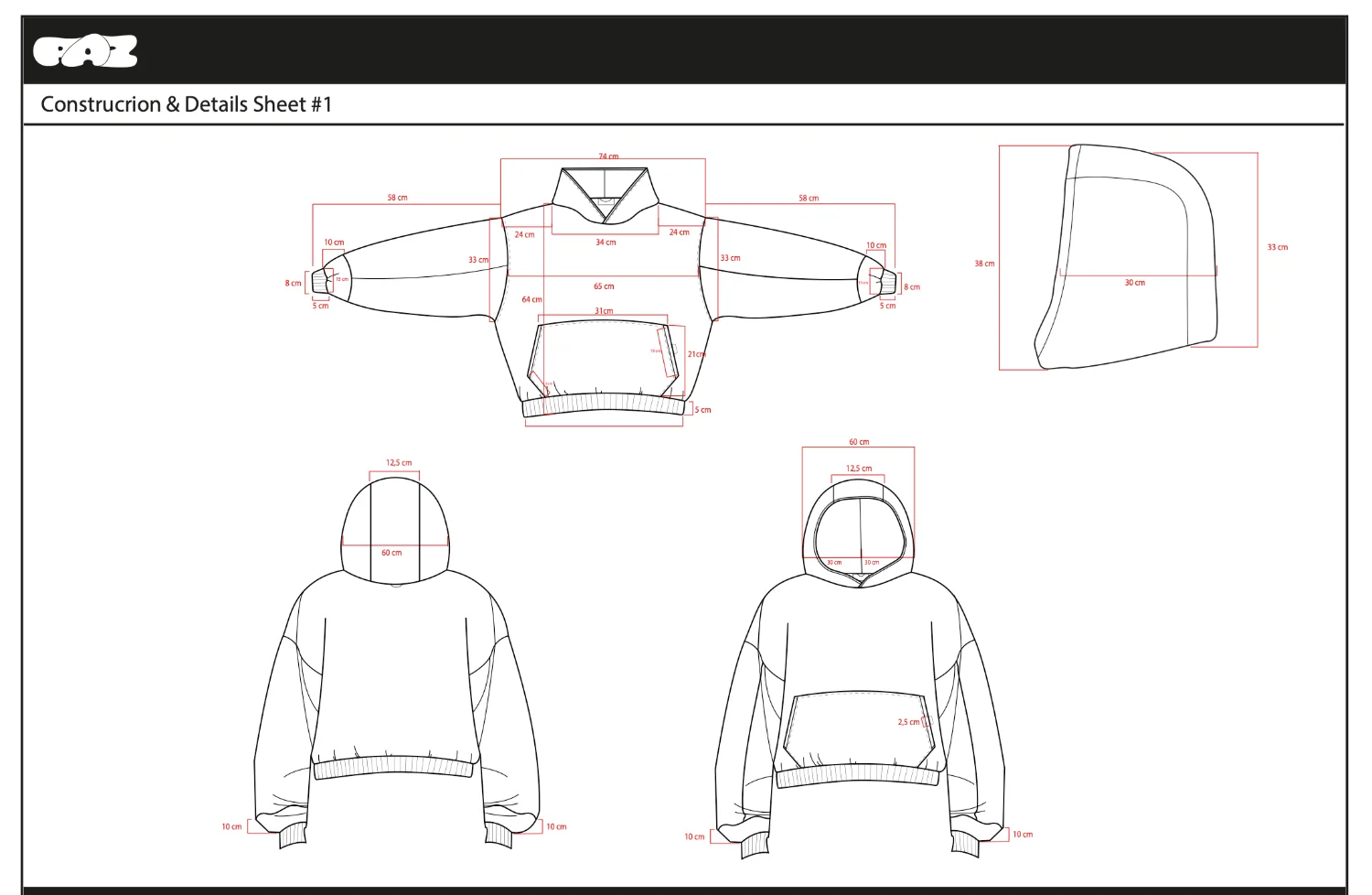
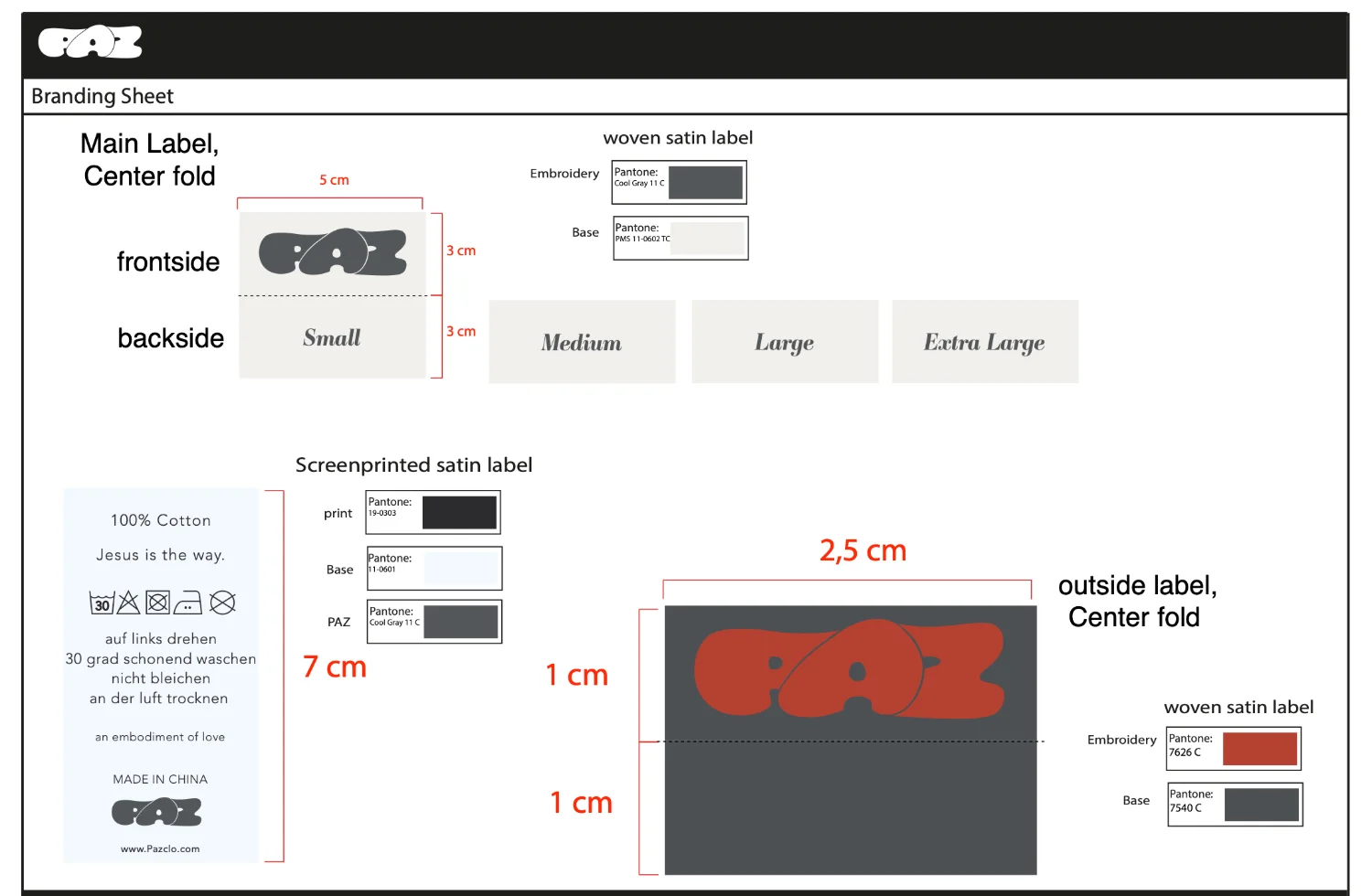
Logo Hoodie · Outwear 1One garment taken beyond the mockup - my personal dream hoodie: eight technical views, a measurement set across five sizes, every trim named and every seam placed. This is the document a factory works from. I took it as far as quotes with a manufacturer and then stopped: unit costs were simply too high. Everything that actually shipped was print on demand, and none of it was the garment drawn here.
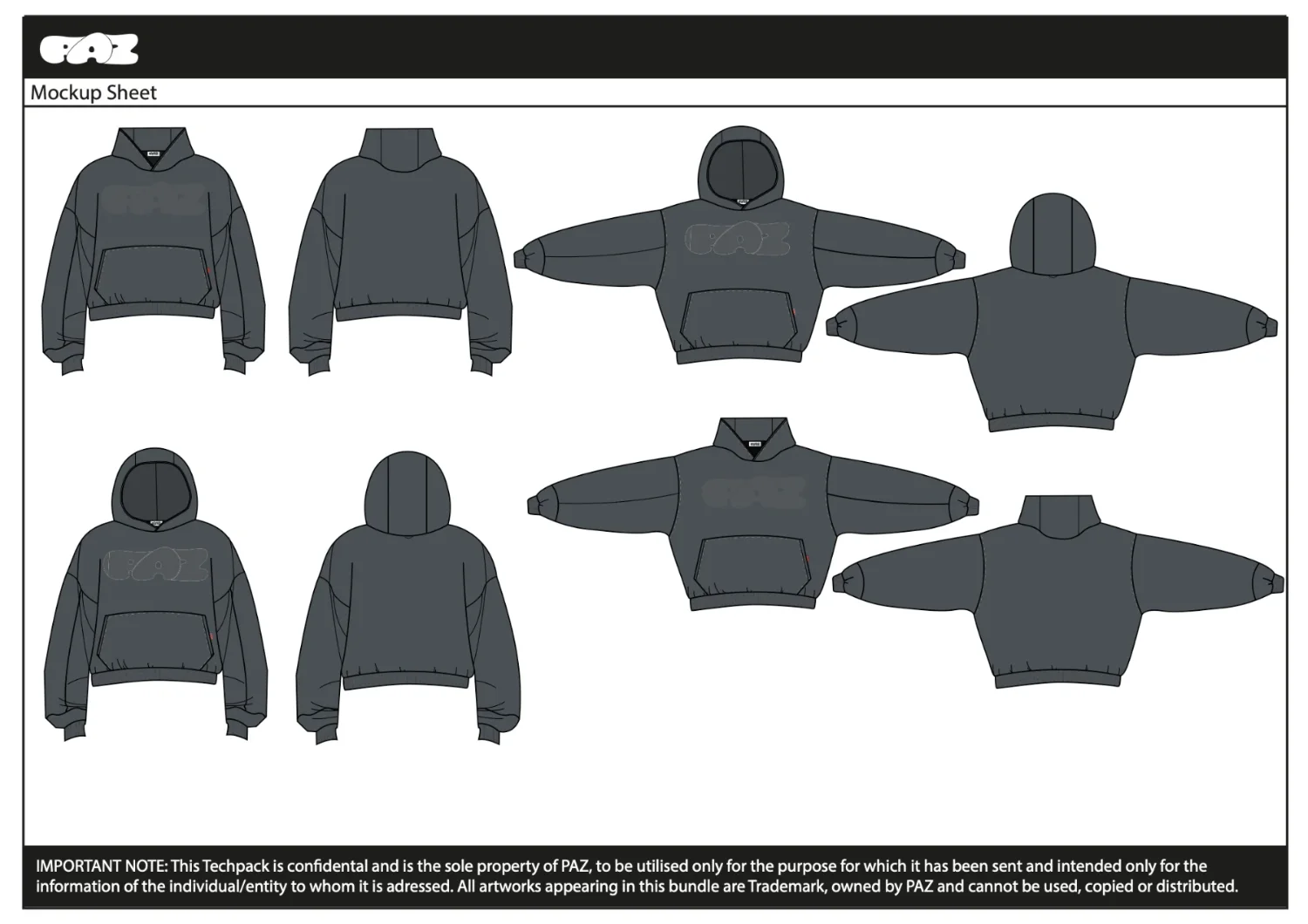
| Silhouette | Oversized, boxy, slightly cropped |
|---|---|
| Fabric | 100% french terry cotton, lightly brushed — 450 gsm |
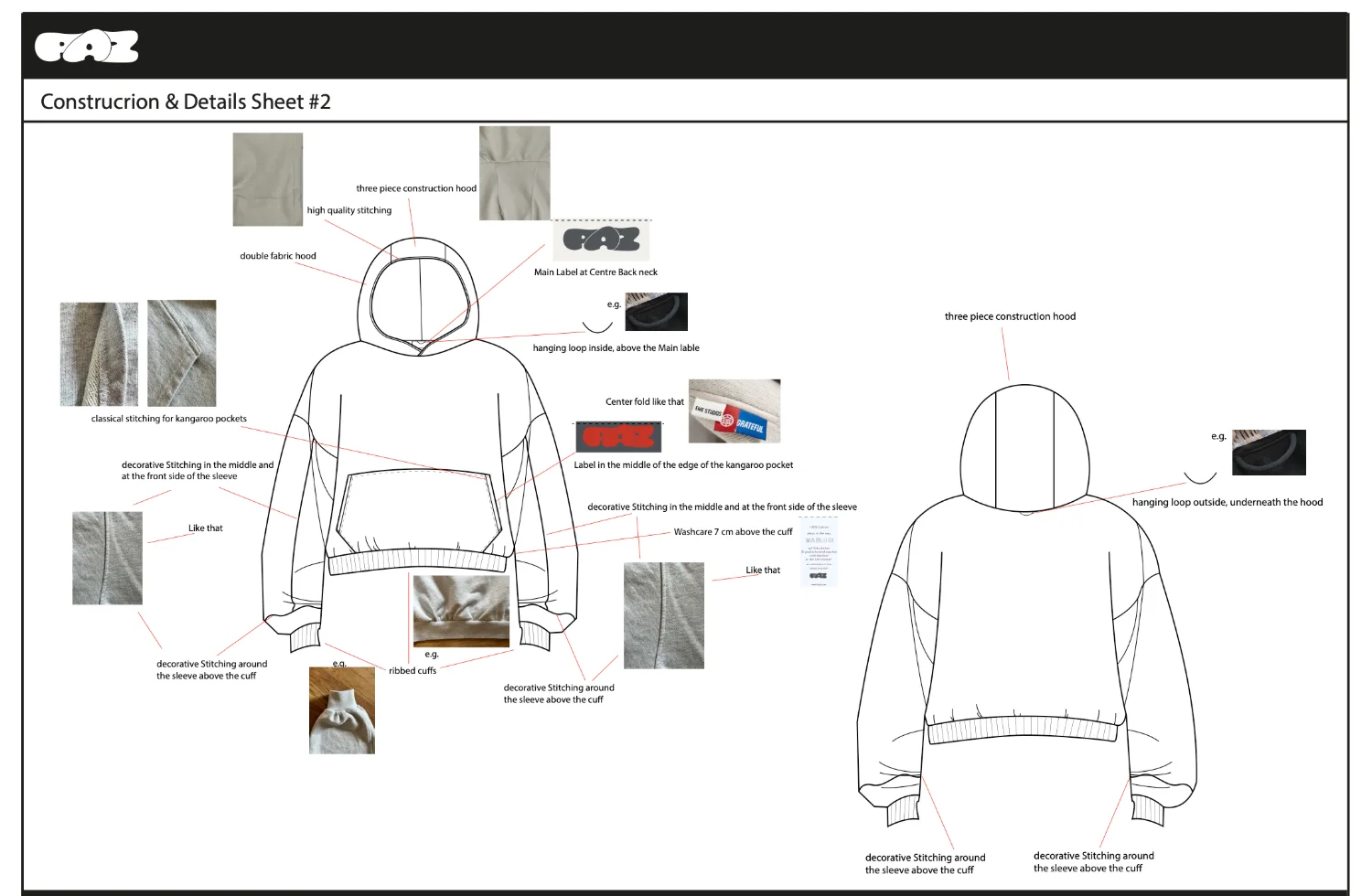
| Construction | Three-piece hood, double fabric · kangaroo pocket · ribbed cuffs · double stitching throughout |
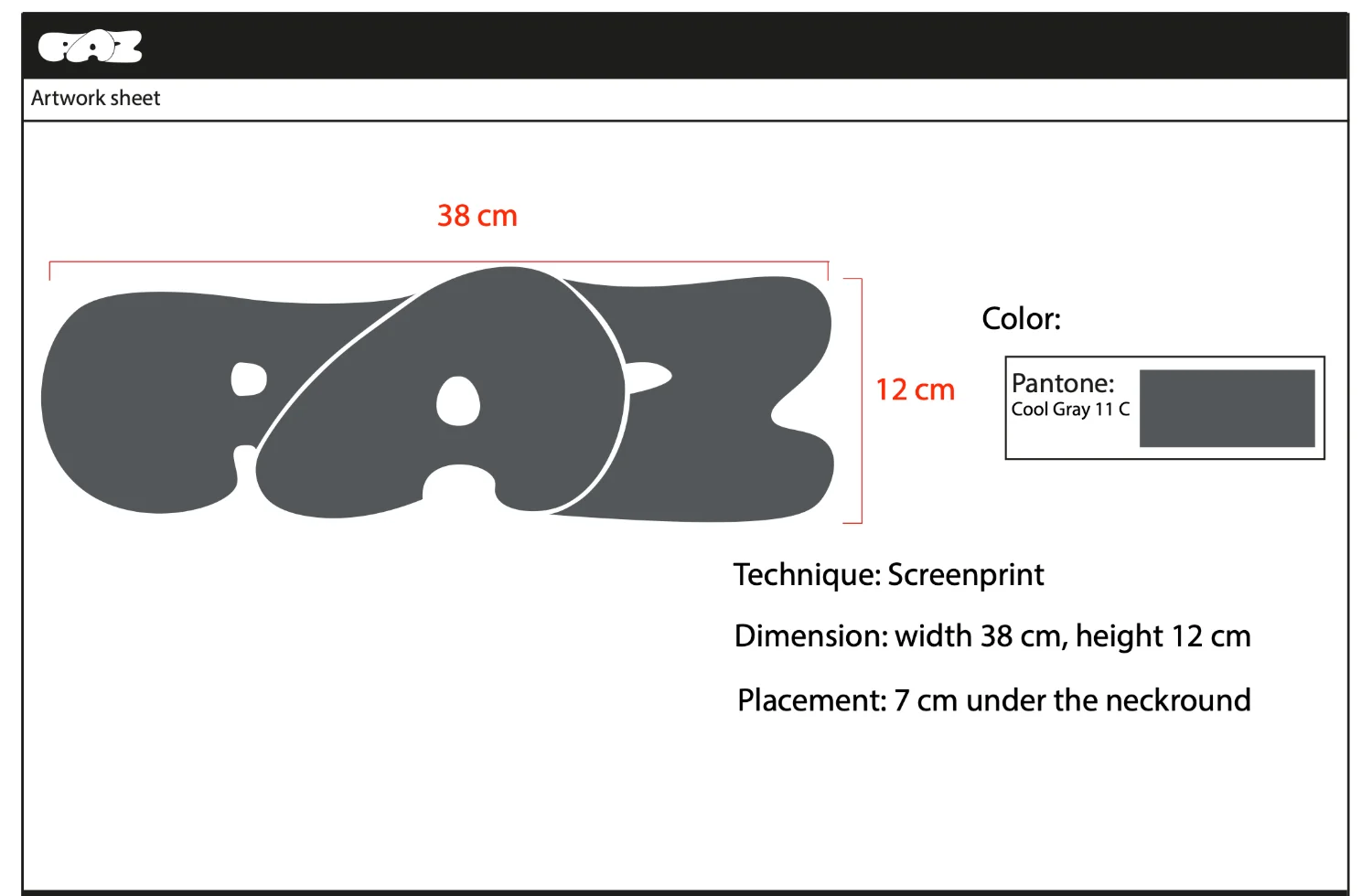
| Screenprint, 38 × 12 cm, set 7 cm below the neckline | |
| Labels | Woven satin at centre back neck · screenprinted satin outside the pocket · washcare 7 cm above the cuff · four sizes |
| Loops | Cotton, inside and outside, matched to the body colour |
| Sizes | XS – XL · sample size L |
| Status | Quoted with a producer — never went to production |
Decorative stitching down the centre and front of the sleeve, again around the sleeve above the cuff. Classical stitching on the kangaroo pocket. Embroidery, woven satin and screenprinted satin each assigned where they belong.
Full techpack — eight sheets including measurements, construction, artwork and branding — on request.
Getting it seen
Campaign & distributionTwo launch ideas: one guerilla and one that could never happen. Both are the same instinct: putting the name in plain sight so nobody can miss it.
A plane towing the wordmark over the most photographed and looked at hill in the world — built, not booked. An honest picture of what the brand wanted to be.
The other one was real: a few hundred stickers made as flyers and left in shops around town. No media budget, so the message had to be worth picking up.
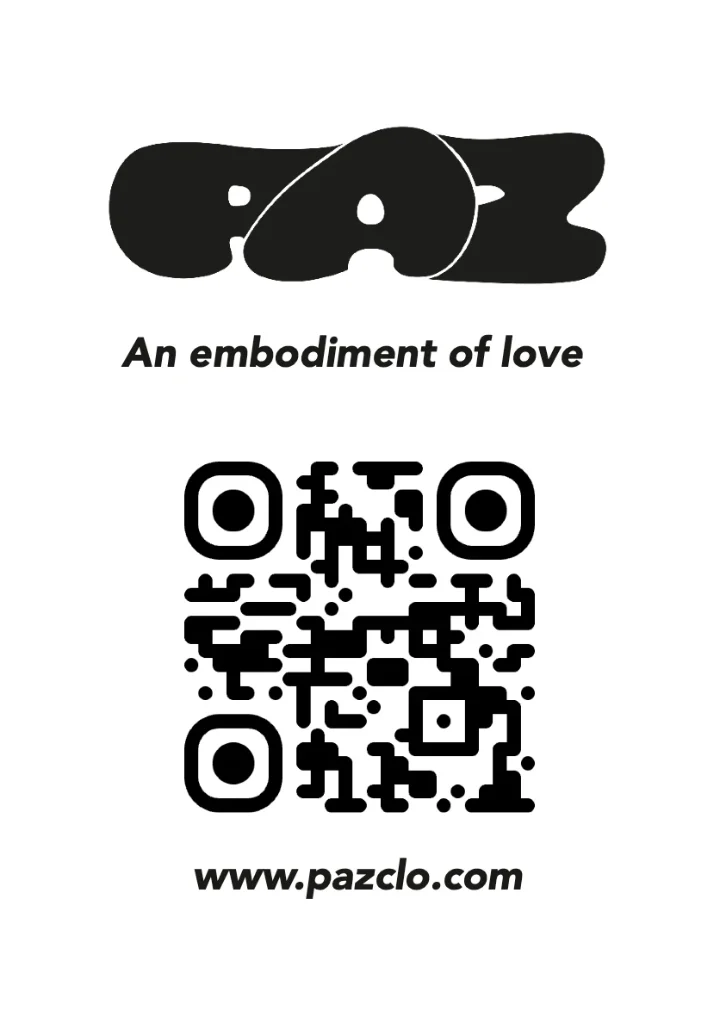
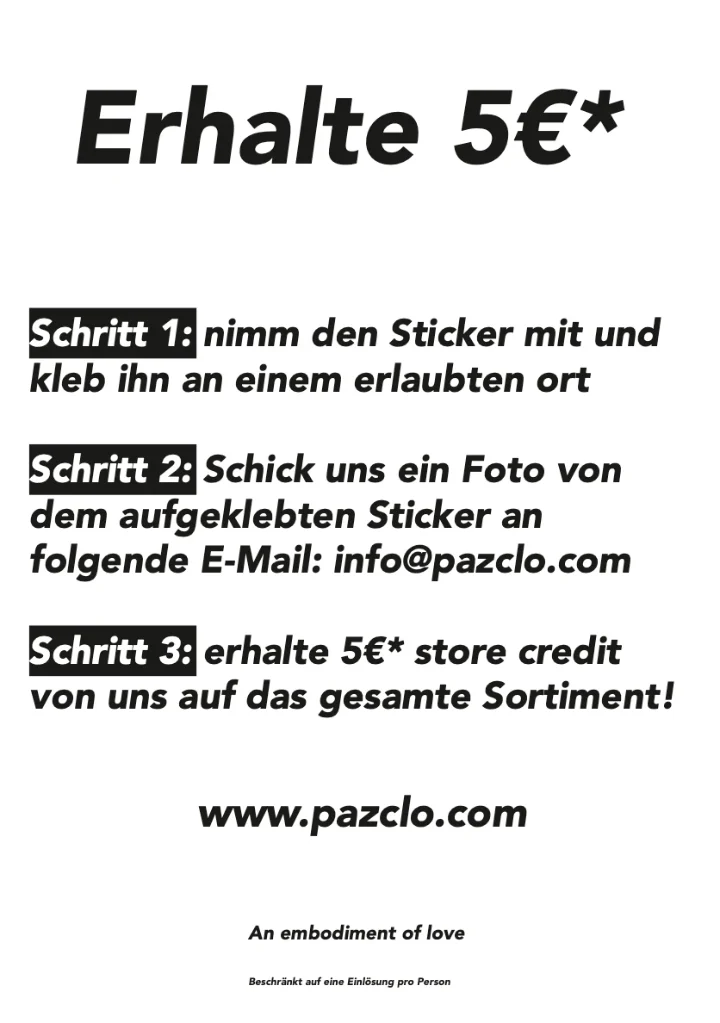
A flyer that pays you to put it up: take it, stick it somewhere legal, send a photo, get five euros back. The logic was simple: 5€ for guaranteed long term physical promo, and if they end up buying anything, it covered itself. The instructions were printed on the peel-off backing, so the rules came off in your hand and only the mark stayed on the wall.
I took a brand from the first graphic to a factory-ready specification. That is the part I want to keep doing.
So this is the offer, plainly: I draw the graphic and I write the document that makes it real — placement in centimetres, fabric weight, trims, the stitching. If you are building a label and want the design handled properly, I'm here.